

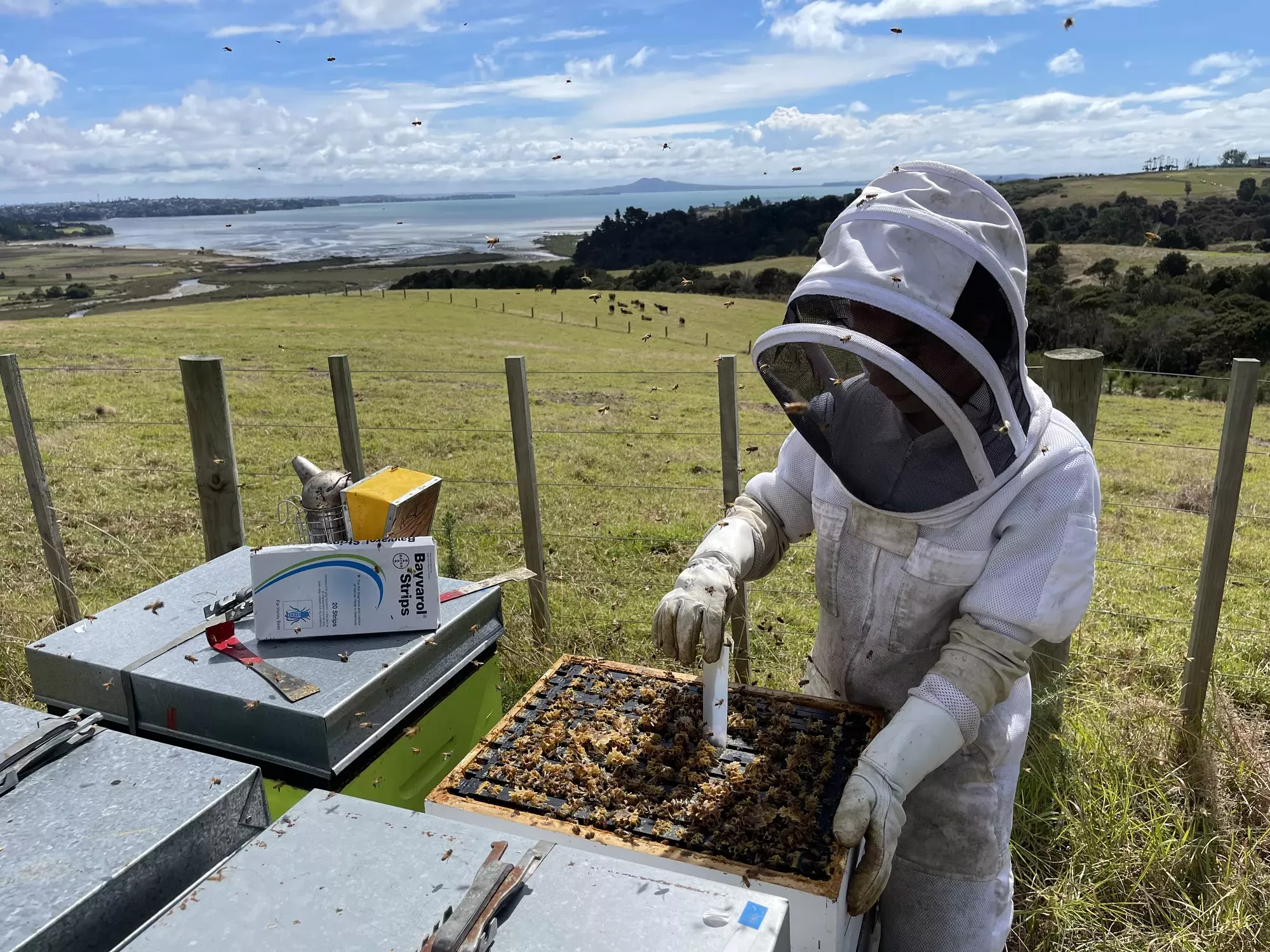
Bayvarol® Varroa Treatment in NZ: Findings from a Plant & Food Research Trial
A recent study by Plant & Food Research New Zealand has delivered some very encouraging results for beekeepers using Bayvarol® as part of their varroa control programme. Conducted by Michelle Taylor, Rafael Campos and Duncan Hedderley, this research provides an independent and highly credible assessment of Bayvarol® performance under New Zealand conditions. The study is expected to be published internationally, bringing global attention to New Zealand's experience managing varroa.
About the Plant & Food Research Bayvarol® NZ Trial
The trial compared Bayvarol® and Apivar® treatments in commercial Waikato colonies over an eight-week period after honey harvest. Researchers monitored varroa levels through ethanol washes, sticky board counts and bee health assessments. The results showed that Bayvarol® consistently reduced mite levels and maintained infestations at low levels throughout the treatment period when used according to label directions. Colonies treated with Bayvarol® were reduced to, or kept levels at approximately one to four varroa per 300 bees during the trial.
How Bayvarol® Controlled Varroa Mite Levels in NZ Colonies
One of the most significant findings relates to colony strength and population. The researchers wrote:
"… colonies treated with Bayvarol® that began with zero to one varroa per 300 bees (well controlled varroa) had twice as many honey bees after eight weeks than hives treated with Apivar® that began with 10+ varroa per 300 bees (not well controlled)."
This finding highlights an important reality of modern beekeeping. Successful varroa control is not simply about killing mites. It is about maintaining strong bee populations throughout the season. More bees generally means stronger colonies, better pollination performance and improved honey production potential.
Impact of Bayvarol® Treatment on Varroa-Associated Virus Load
Another particularly positive result was the impact on viral loads. Analysis conducted by dnature Diagnostics and Research found that colonies treated with Bayvarol® showed reductions in deformed wing virus, black queen cell virus, and chronic bee paralysis virus by the end of the eight-week treatment period. These viruses are among the most damaging pathogens affecting honey bee colonies. Effective virus suppression is critical because healthy bees are more productive, more resilient and better able to withstand seasonal stresses.
Varroa Monitoring Remains Essential for NZ Beekeepers
The study also reinforces an important management lesson for all beekeepers. Across the New Zealand market there are anecdotes of treatments performing exceptionally well in some situations and less effectively in others. Plant & Food Research emphasised that treatment decisions should be based on measured mite levels rather than the calendar alone.
Monitoring is now a critical part of successful mite control. Taking samples before treatment, during treatment and after treatment allows beekeepers to confirm that products are performing as expected and to identify problems before they affect colony health. Regular alcohol washes provide the data needed to make informed treatment decisions and protect colony performance long term.
The development of resistance is a possibility for most chemical treatments and hives in New Zealand may be impacted by this. Monitoring effectiveness of treatments is an important tool in determining if treatments remain effective.
The message from this study is clear: when used correctly, Bayvarol® remains an effective varroa control tool, contributes to improved colony health, reduces virus pressure and forms an important part of a rotational mite management programme for New Zealand beekeepers.
FAQ: Bayvarol® Varroa Treatment in NZ
How long does a Bayvarol® treatment take?
Bayvarol® strips are typically left in the hive for six to eight weeks. Always refer to the product label for specific application instructions and treatment duration.
When is Bayvarol® applied in NZ?
Bayvarol® can be used in early spring, or in later summer after honey supers have been removed. It can also be used in emergency situations during the season as set out below. Timing will vary depending on your region and mite monitoring results.
Can Bayvarol® be used with honey supers on?
Yes, Bayvarol® strips can be used with honey supers on if mite loads are at high levels.
How many Bayvarol® strips are used per hive?
4 strips are recommended for a full-depth colony. Refer to the product label for guidance on smaller or larger hive configurations.
Where can I find more varroa management information in NZ?
MPI and Plant & Food Research both publish guidance on varroa management in New Zealand. You can also contact the Ecrotek team for advice on monitoring, treatment timing and rotation strategies.

